
© All Rights Reserved | Roof Replacement and Repair - Zaman Roofing LLC. | SEO Powered by The SEO CT Experts
- Google Rating5.0Based on 73 reviews
 Zaman Roofing - CT Roofing Contractors & Roof Repair5.0Sergey Y."Zaman Roofing” recently completed a roof replacement project in our condo complex, and we are extremely satisfied with their service. From start to finish, their team demonstrated professionalism, efficiency, and exceptional craftsmanship. They were prompt in their communication, providing detailed explanations and answering all our questions. The crew arrived on time, worked diligently, and completed the project within the estimated timeframe.Not only did Zaman Roofing exhibit outstanding technical skills, but they also ensured minimal disruption to our daily activities. They took great care to protect our property, cleaning up thoroughly each day and leaving no trace of debris behind.The quality of the new roof is outstanding. Zaman Roofing used top-grade materials and paid attention to every detail, resulting in a sturdy and visually appealing finished product. The roof has significantly enhanced the overall appearance of our condo complex.We would highly recommend Zaman Roofing to anyone in need of roofing services. Their professionalism, expertise, and attention to customer satisfaction make them a reliable choice for roof replacements. We are grateful for their excellent work and would not hesitate to hire them again in the future.Christopher Z.Zaman Roofing was AWESOME!!!! This is my third time doing a roof in CT on my third home and Zaman did an outstanding job on my rather unique roof line. They even replaced a skylight. I needed a Roof Contract in place before insurance would allow the purchase because the seller was a DeeBag. Zaman worked with my realtor, banker, etc and even waited patiently while the seller delayed the process by 4 months. The week I closed, Zaman Roofing was up and at em. Stripping, prepping and replacing. In and Out. Property was nice and clean after the work was complete. I would highly recommend.Steve TZaman Roofing, located in Berlin, CT, truly excels in providing top-notch roofing services. I am absolutely thrilled to give them a well-deserved 5-star review for their outstanding work. They have proven themselves as experts in roofing Berlin CT, and I couldn't be happier with the results.When it comes to roofing in Berlin, Zaman Roofing stands out from the competition. Their team of skilled professionals demonstrated exceptional attention to detail during the installation of my new roof. They meticulously handled every aspect of the project, ensuring both aesthetics and durability were top-notch.What impressed me the most was Zaman Roofing's commitment to customer satisfaction. From my initial contact with them, they were responsive, courteous, and eager to understand my specific roofing needs in Berlin. Their exceptional customer service throughout the entire process made me feel valued as a client.Zaman Roofing's expertise in roofing Berlin is truly commendable. They have an extensive portfolio of successful projects throughout Berlin, CT, showcasing their skill and knowledge in a variety of roofing styles and materials. Regardless of the complexity of the job, they have the necessary resources to deliver exceptional results.I cannot emphasize enough how satisfied I am with Zaman Roofing's services in Berlin, CT. Their professionalism, reliability, and dedication to their craft are unparalleled. If you're searching for exceptional roofing services in Berlin CT, Zaman Roofing is the company to choose. They will exceed your expectations in every way.In conclusion, Zaman Roofing unquestionably deserves a stellar 5-star rating for their exemplary roofing services in Berlin, CT. Their expertise in roofing Berlin and roofing Berlin CT shines through in their exceptional workmanship and customer service. I highly recommend Zaman Roofing for all your roofing needs.Gary G.Zaman replaced the roof on my 2,200 sq. ft. colonial in 2015. The workmanship was perfect. Unfortunately, over time, the top-of-the line shingles discolored. He was totally supportive in getting the manufacturer to replace them at no cost to me. He just replaced the roof with the new shingles. It was another perfect job. It was completed in one day. The crew was great and they cleaned the area spotless.Chris DWe used Zaman Roofing for our Roof and Gutter Replacement, I acquired 5 quotes for the work and found Zaman to be the most reasonable, it was a Good Decision to choose Zaman Roofing, Seweryn was Professional in every aspect and the Clean-up was nothing short of Amazing, I would Highly Recommend using Zaman RoofingRobert D.Excellent Service and Value - great crew and easy to deal with - highly recommended !Sunghoon P.Great work and reasonable price. I am so happy with their service. I asked a bunch of questions before and after the service and his responses were very prompt and straight to the point. Highly recommend.Adrienne M.I am so pleased that I used this company. My new roof looks fantastic. Such a hard working crew. Seweryn was informative and professional. Price was very completive. Don't hesitate to use them you will be very satisfied. Highly recommend!Nancy M.Good communication, timely response and knowledgeable. Very happy with our experience and highly recommend this company.Beata M.We used Zaman for our roof replacement recently and are very pleased. They replaced our roof in one day and gave us a very competitive quote. Good quality of work. Highly recommended.Lori K.They were here when they said they would. Professional & left everything neat ,cleaned up everything. They were in & out in a day & a half. Would recommend Zaman roifing.Dan R.A+ service, professional and quick response time.Anna G.Zaman and his crew provide great workmanship they installed new roofs they take great pride in the work they do. They were punctual and did a amazing job with the roof installation and clean up. Highly recommend Zaman Roofing to family and friends. Thank you for the opportunity to work with such a amazing contractorScott M.Awesome contractor, I would highly recommend him to family & friends. Seweryn & his crew were here on time & worked diligently. They were the happiest workers I've ever dealt with (I am a former construction project manager with the Federal government). Any & all questions were answered. My neighbors couldn't believe they finished the job in one day & complimented how great the new roof looks.Clement D.Great roofing contractors. I love to recommend it to my friends and family.Karen 9.With the quality, price, timeliness, all round nice guy and great crew, Zaman Roofing LLC is what other companies aspire to be.... Clean, helpful and a pleasure to recommend....james C.Excellent experience from start to finish, all appointments and work times met in a timely fashion, workmanship and clean up left nothing to be desired.Would be a definite recommendation, very pleased.Margaret B.I had obtained multiple quotes and did my due diligence research and Seweryn Zaman came back with fair price and good recommendations. He was professional, explained everything that he was going to do and never once he rushed me during decision process. He showed up on time with his hard working crew and finished my roof in one day. I was amazed with his crew who worked like busy bees. Very impressed with the clean up process and the end product. Two months after he finished my roof he was still helping me deal with the insurance company making sure I had everything I needed. Thank you SewerynSteve B.Very professional and easy to work. The crew came in, replaced my roof and then cleaned up everything! Highly recommended.Jim O.Competitive quote among four others. Seweryn Zaman provided larger color samples of the shingle colors we were interested in. He obtained the building permit, showed up on the day expected with his entire crew. Our older roof was on 24" trusses and needed more plywood replaced than anticipated. He got the additional sheets replaced on the day of the re-roofing. The crew worked with him late until the job was done and picked up every piece of old debris. The roof passed final town inspection with no concerns. Zaman Roofing is easy to deal with; he's responsive on text messages and phone calls. I used them in the past for an emergency repair and he found a well-hidden leak from the builder.Dale C.The crews did a good job, and the leader of the crew did a great job when they replaced the roof of my house in Farming on 7/6&7 this year. When they worked on the project, they worked professionally and in detail. We are very pleased with the work they have done, and highly recommend people to have the company worked on their roof projects.Forrest B.Zaman's was very professional, excellent quality of work and very responsive to our needs. This roofing experience was excellent from start to finish and provided an excellent value. Would certainly recommend them to any friend.Yonatan M.We used Zaman Roofing to replace our roof in 2019 and could not be happier with the service and product. A highly professional company and great personal interaction with the owner. The workers took great care of our landscaping, and the owner was there frequently to supervise the work and take care of finishing touches like flashing the chimney. We have had zero issues since then and highly recommend this company.Quinn V.Zaman was awesome. He was communicative, on-time, and was able to give me a quick inspection of our roof despite the rain. I rarely have a contractor tell me that I didn't need to spend any money, but Zaman told me my roof was fine for the next several years.magdalena K.We recently used Zaman Roofing to replace our 26-year-old roof. Right from the start they were great! Sevy was extremely professional and knowledgeable and gave us a great quote. Everything was done as they described and the final project looked great. The owner was on the job from start to finish as he promised.Ariadna G.Our experience with Zaman Roofing was excellent. I was very impressed with both their work and their customer service. Seweryn was very knowledgeable and professional.Larry G.What a wonderful business. Very responsive. They showed up exactly when expected, completed the project quickly and accurately and left no trace after clean up. All with a very competitive price. I would highly recommend Zaman to anyone looking to have roofing work done.STEVE R.I was very pleased with the roof and gutter repairs performed by Zaman Roofing on two of my buildings. Good workmanship and fair prices, I would recommend and use again.Danielle D.These guys stripped and reshuffled my roof is 1 day! They did an awesome job. Roof is beautiful. He uses a dump trailer which is great and they cleaned up well. Very happy with the work. Also pricing was fair.


Everything You Need to Know About Industrial Roof Repair
Category: Roof Repairs • June 7, 2026
The use of industrial roofs is essential in securing manufacturing plants, warehouses, distribution centers, and other commercial facilities. These roofs are made to endure extreme weather conditions, heavy equipment loads, and continuous exposure to environmental factors.
Nevertheless, even the most robust roofing systems may have problems in the course of time. Knowledge of industrial roof repair can help property owners and facility managers to have a safe, efficient, and cost-effective building.
What Is Industrial Roof Repair?
Industrial roof repair is the process of detecting and repairing damage, wear, or structural problems in roofing systems used in industrial buildings. In contrast to residential roofing, industrial roofing can cover large surface areas and can be made of metal panels, built-up roofing (BUR), modified bitumen, single-ply membranes, or spray foam roofing.
Repairing roofs may involve sealing small leaks and replacing damaged areas or structural issues that may compromise the integrity of the whole roofing system. Early repairs can be used to avoid further damage and prolong the life of the roof.
Common Causes of Industrial Roof Damage
Industrial roof deterioration may be caused by a number of factors. Knowing these causes can assist building owners in taking precautions and repairing the buildings before the problems escalate.
Among the most common causes of roof damage is weather exposure. Intense rain, high-speed winds, hail, snow, and direct sunshine can slowly deteriorate roofing materials. Expansion and contraction can also occur due to temperature changes, resulting in cracks and gaps.
Another problem is poor installation. Without proper installation of a roof, weaknesses may arise leading to leaks and early deterioration. Also, the absence of frequent maintenance may enable minor problems to develop into expensive ones.
Signs Your Industrial Roof Needs Repair
It is important to be aware of the initial signs of roof damage to prevent significant repairs or replacement. Water leakage within the building is one of the most apparent signs. The presence of water stains on ceilings, walls, or equipment is a common indicator of roofing issues, which need to be addressed as soon as possible.
Another indicator of needing potential repairs is visible roof damage. This may involve cracks, punctures, loose flashing, rusted metal panels, or separated seams. Standing water on flat roofs is especially worrying since it may hasten the process of material decay and leaks.
An increase in energy bills can also be a sign of roofing problems. Broken insulation or roofing can decrease energy efficiency, which causes heating and cooling systems to strain. In other instances, strange smells, mold, or too much moisture in the interior can indicate that there are concealed roof leaks.
Frequent checks can be used to detect these red flags in time and minimize the chances of sudden roofing collapses.
Types of Industrial Roof Repair Services
Industrial roof repair is differentiated by the roofing system and the damage. One of the most common services is leak repair. Contractors identify the origin of water intrusion and use relevant solutions like sealing, patching, or changing the membrane.
Another service is flashing repair. Flashing shields the exposed sections of the roofs, edges, and joints. Broken flashing may enable water to get into the building and destroy the roofing system.
Single-ply roofing systems may frequently require membrane repair. Punctures, tears, and seam failures can be repaired with special materials and techniques that are meant to restore waterproof protection.
Repairing metal roofs can include the replacement of damaged panels, corrosion treatment, fastener tightening, and joint resealing. If roofs are having drainage issues, they can be repaired by fixing the slopes, clearing drains, or adding more drainage systems to avoid water build-up.
In other instances, roof coating can be performed to enhance durability, improve weather resistance, and increase the life of the old roof.
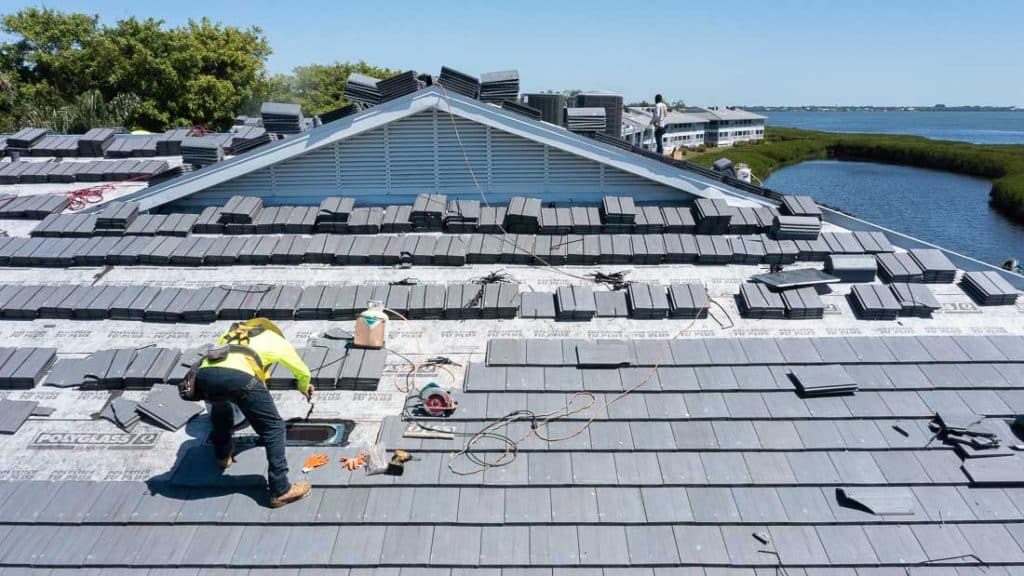
The Importance of Regular Roof Inspections
One of the best methods of preventing expensive repairs is to conduct routine roof inspections. Professional checks are effective in detecting minor problems before they escalate into bigger structural problems.
Most professionals suggest that roof inspections should be done at least twice a year, usually during the spring and autumn. Further checks should be carried out following extreme weather conditions, including storms or hail.
Roofing professionals also examine the state of the roofing materials, seams, flashing, drainage systems, and equipment mounted on the roof during an inspection. They look for wear and tear, damage, and intrusion of moisture, which may not be visible when one is inside the building.
Proactive inspection programs will help to save a lot of money in maintenance and increase the roof service life. It also helps businesses to prevent unforeseen inconveniences due to roofing failures.
Benefits of Timely Industrial Roof Repair
The timely solution of roofing problems can have many advantages to industrial premises. Cost savings is one of the greatest benefits. Minor repairs are usually much less expensive than large-scale restoration work or a total replacement of the roof.
Timely repairs also safeguard valuable assets within the building. Water leaks may destroy equipment, electrical systems, and valuable documents. Moisture intrusion prevention assists in protecting business operations and minimizing downtime.
Another important advantage is enhanced energy efficiency. Properly maintained roofs will offer superior insulation and temperature regulation, which can reduce heating and cooling expenses during the year.
Safety is also a factor. Roofs that are damaged can pose risks to employees, contractors, and visitors. Structural weaknesses and water penetration can be repaired to ensure a safer working environment.
Also, frequent repairs will help to prolong the life of the roofing system, which will enable businesses to make the most of their investment and postpone the necessity of replacing the whole system.