
© All Rights Reserved | Roof Replacement and Repair - Zaman Roofing LLC. | SEO Powered by The SEO CT Experts
- Google Rating5.0Based on 73 reviews
 Zaman Roofing - CT Roofing Contractors & Roof Repair5.0Sergey Y."Zaman Roofing” recently completed a roof replacement project in our condo complex, and we are extremely satisfied with their service. From start to finish, their team demonstrated professionalism, efficiency, and exceptional craftsmanship. They were prompt in their communication, providing detailed explanations and answering all our questions. The crew arrived on time, worked diligently, and completed the project within the estimated timeframe.Not only did Zaman Roofing exhibit outstanding technical skills, but they also ensured minimal disruption to our daily activities. They took great care to protect our property, cleaning up thoroughly each day and leaving no trace of debris behind.The quality of the new roof is outstanding. Zaman Roofing used top-grade materials and paid attention to every detail, resulting in a sturdy and visually appealing finished product. The roof has significantly enhanced the overall appearance of our condo complex.We would highly recommend Zaman Roofing to anyone in need of roofing services. Their professionalism, expertise, and attention to customer satisfaction make them a reliable choice for roof replacements. We are grateful for their excellent work and would not hesitate to hire them again in the future.Christopher Z.Zaman Roofing was AWESOME!!!! This is my third time doing a roof in CT on my third home and Zaman did an outstanding job on my rather unique roof line. They even replaced a skylight. I needed a Roof Contract in place before insurance would allow the purchase because the seller was a DeeBag. Zaman worked with my realtor, banker, etc and even waited patiently while the seller delayed the process by 4 months. The week I closed, Zaman Roofing was up and at em. Stripping, prepping and replacing. In and Out. Property was nice and clean after the work was complete. I would highly recommend.Steve TZaman Roofing, located in Berlin, CT, truly excels in providing top-notch roofing services. I am absolutely thrilled to give them a well-deserved 5-star review for their outstanding work. They have proven themselves as experts in roofing Berlin CT, and I couldn't be happier with the results.When it comes to roofing in Berlin, Zaman Roofing stands out from the competition. Their team of skilled professionals demonstrated exceptional attention to detail during the installation of my new roof. They meticulously handled every aspect of the project, ensuring both aesthetics and durability were top-notch.What impressed me the most was Zaman Roofing's commitment to customer satisfaction. From my initial contact with them, they were responsive, courteous, and eager to understand my specific roofing needs in Berlin. Their exceptional customer service throughout the entire process made me feel valued as a client.Zaman Roofing's expertise in roofing Berlin is truly commendable. They have an extensive portfolio of successful projects throughout Berlin, CT, showcasing their skill and knowledge in a variety of roofing styles and materials. Regardless of the complexity of the job, they have the necessary resources to deliver exceptional results.I cannot emphasize enough how satisfied I am with Zaman Roofing's services in Berlin, CT. Their professionalism, reliability, and dedication to their craft are unparalleled. If you're searching for exceptional roofing services in Berlin CT, Zaman Roofing is the company to choose. They will exceed your expectations in every way.In conclusion, Zaman Roofing unquestionably deserves a stellar 5-star rating for their exemplary roofing services in Berlin, CT. Their expertise in roofing Berlin and roofing Berlin CT shines through in their exceptional workmanship and customer service. I highly recommend Zaman Roofing for all your roofing needs.Gary G.Zaman replaced the roof on my 2,200 sq. ft. colonial in 2015. The workmanship was perfect. Unfortunately, over time, the top-of-the line shingles discolored. He was totally supportive in getting the manufacturer to replace them at no cost to me. He just replaced the roof with the new shingles. It was another perfect job. It was completed in one day. The crew was great and they cleaned the area spotless.Chris DWe used Zaman Roofing for our Roof and Gutter Replacement, I acquired 5 quotes for the work and found Zaman to be the most reasonable, it was a Good Decision to choose Zaman Roofing, Seweryn was Professional in every aspect and the Clean-up was nothing short of Amazing, I would Highly Recommend using Zaman RoofingRobert D.Excellent Service and Value - great crew and easy to deal with - highly recommended !Sunghoon P.Great work and reasonable price. I am so happy with their service. I asked a bunch of questions before and after the service and his responses were very prompt and straight to the point. Highly recommend.Adrienne M.I am so pleased that I used this company. My new roof looks fantastic. Such a hard working crew. Seweryn was informative and professional. Price was very completive. Don't hesitate to use them you will be very satisfied. Highly recommend!Nancy M.Good communication, timely response and knowledgeable. Very happy with our experience and highly recommend this company.Beata M.We used Zaman for our roof replacement recently and are very pleased. They replaced our roof in one day and gave us a very competitive quote. Good quality of work. Highly recommended.Lori K.They were here when they said they would. Professional & left everything neat ,cleaned up everything. They were in & out in a day & a half. Would recommend Zaman roifing.Dan R.A+ service, professional and quick response time.Anna G.Zaman and his crew provide great workmanship they installed new roofs they take great pride in the work they do. They were punctual and did a amazing job with the roof installation and clean up. Highly recommend Zaman Roofing to family and friends. Thank you for the opportunity to work with such a amazing contractorScott M.Awesome contractor, I would highly recommend him to family & friends. Seweryn & his crew were here on time & worked diligently. They were the happiest workers I've ever dealt with (I am a former construction project manager with the Federal government). Any & all questions were answered. My neighbors couldn't believe they finished the job in one day & complimented how great the new roof looks.Clement D.Great roofing contractors. I love to recommend it to my friends and family.Karen 9.With the quality, price, timeliness, all round nice guy and great crew, Zaman Roofing LLC is what other companies aspire to be.... Clean, helpful and a pleasure to recommend....james C.Excellent experience from start to finish, all appointments and work times met in a timely fashion, workmanship and clean up left nothing to be desired.Would be a definite recommendation, very pleased.Margaret B.I had obtained multiple quotes and did my due diligence research and Seweryn Zaman came back with fair price and good recommendations. He was professional, explained everything that he was going to do and never once he rushed me during decision process. He showed up on time with his hard working crew and finished my roof in one day. I was amazed with his crew who worked like busy bees. Very impressed with the clean up process and the end product. Two months after he finished my roof he was still helping me deal with the insurance company making sure I had everything I needed. Thank you SewerynSteve B.Very professional and easy to work. The crew came in, replaced my roof and then cleaned up everything! Highly recommended.Jim O.Competitive quote among four others. Seweryn Zaman provided larger color samples of the shingle colors we were interested in. He obtained the building permit, showed up on the day expected with his entire crew. Our older roof was on 24" trusses and needed more plywood replaced than anticipated. He got the additional sheets replaced on the day of the re-roofing. The crew worked with him late until the job was done and picked up every piece of old debris. The roof passed final town inspection with no concerns. Zaman Roofing is easy to deal with; he's responsive on text messages and phone calls. I used them in the past for an emergency repair and he found a well-hidden leak from the builder.Dale C.The crews did a good job, and the leader of the crew did a great job when they replaced the roof of my house in Farming on 7/6&7 this year. When they worked on the project, they worked professionally and in detail. We are very pleased with the work they have done, and highly recommend people to have the company worked on their roof projects.Forrest B.Zaman's was very professional, excellent quality of work and very responsive to our needs. This roofing experience was excellent from start to finish and provided an excellent value. Would certainly recommend them to any friend.Yonatan M.We used Zaman Roofing to replace our roof in 2019 and could not be happier with the service and product. A highly professional company and great personal interaction with the owner. The workers took great care of our landscaping, and the owner was there frequently to supervise the work and take care of finishing touches like flashing the chimney. We have had zero issues since then and highly recommend this company.Quinn V.Zaman was awesome. He was communicative, on-time, and was able to give me a quick inspection of our roof despite the rain. I rarely have a contractor tell me that I didn't need to spend any money, but Zaman told me my roof was fine for the next several years.magdalena K.We recently used Zaman Roofing to replace our 26-year-old roof. Right from the start they were great! Sevy was extremely professional and knowledgeable and gave us a great quote. Everything was done as they described and the final project looked great. The owner was on the job from start to finish as he promised.Ariadna G.Our experience with Zaman Roofing was excellent. I was very impressed with both their work and their customer service. Seweryn was very knowledgeable and professional.Larry G.What a wonderful business. Very responsive. They showed up exactly when expected, completed the project quickly and accurately and left no trace after clean up. All with a very competitive price. I would highly recommend Zaman to anyone looking to have roofing work done.STEVE R.I was very pleased with the roof and gutter repairs performed by Zaman Roofing on two of my buildings. Good workmanship and fair prices, I would recommend and use again.Danielle D.These guys stripped and reshuffled my roof is 1 day! They did an awesome job. Roof is beautiful. He uses a dump trailer which is great and they cleaned up well. Very happy with the work. Also pricing was fair.


Understanding Flat Roofs and the Process of Replacing Them
Category: Roof Replacement • June 25, 2026
Flat roofs are a common type of roofing used in residential and commercial buildings due to their contemporary look, good utilization of space, and inexpensive construction. In comparison to traditional pitched roofs, flat roofs have a very low slope that enables water to flow and still have a very flat surface.
Despite the fact that flat roofs are strong and convenient, they are not everlasting. With time, weather exposure, old materials, and drainage problems may cause damage that may need a complete replacement.
Knowing the functionality of flat roofs and how they are replaced can help property owners make the right decision and secure their investment.
What Is a Flat Roof?
Flat roofing is a type of roofing system which looks flat but normally has a slight slope to permit water to run off. These roofs are typical of commercial buildings, apartment complexes, and modern homes. The possibility to use the roof space to install equipment, install solar panels, rooftop gardens, or recreational spaces is one of the greatest benefits of a flat roof.
Flat roofs are commonly built with materials like modified bitumen, EPDM rubber, TPO, PVC, or built-up roofing systems. All the materials have various advantages in terms of durability, energy consumption, and maintenance. Selecting the appropriate material is based on the requirements of the building, the climate of the area, and the cost.
Common Signs That a Flat Roof Needs Replacement
Although regular maintenance can help to prolong the life of a flat roof, there is a time when it is not possible to repair it any longer. Early identification of the warning signs can help to avoid expensive structural damage.
One of the most common indicators is persistent water pooling. Standing water may compromise roofing materials and expose them to the possibility of leaks. Leaks that occur frequently even after repair could indicate that the roof system has expired.
Deterioration is also indicated by visible cracks, blisters, and membrane separation. When the roof surface is damaged in several places, it might be more economical to replace it than to continue repairing it. Also, rising energy bills may be a sign of ineffective insulation due to the old roof system.
Benefits of Replacing a Flat Roof
There are long-term advantages to replacing a flat roof other than merely repairing leaks. A new roof will enhance the overall safety and structural integrity of the building and increase energy efficiency.
With modern roofing, the materials are made to be more insulated and more reflective of sunlight to ensure that heating and cooling costs are minimized.
Replacement reduces the chances of unforeseen repairs and water damage that may interfere with business processes or everyday living.
The other important benefit is increase property value. A new roof is a good attribute to potential buyers or tenants as it will minimize future maintenance issues. A roof replacement investment can produce significant returns in terms of better performance and reduced operating expenses in most instances.
The Flat Roof Replacement Process
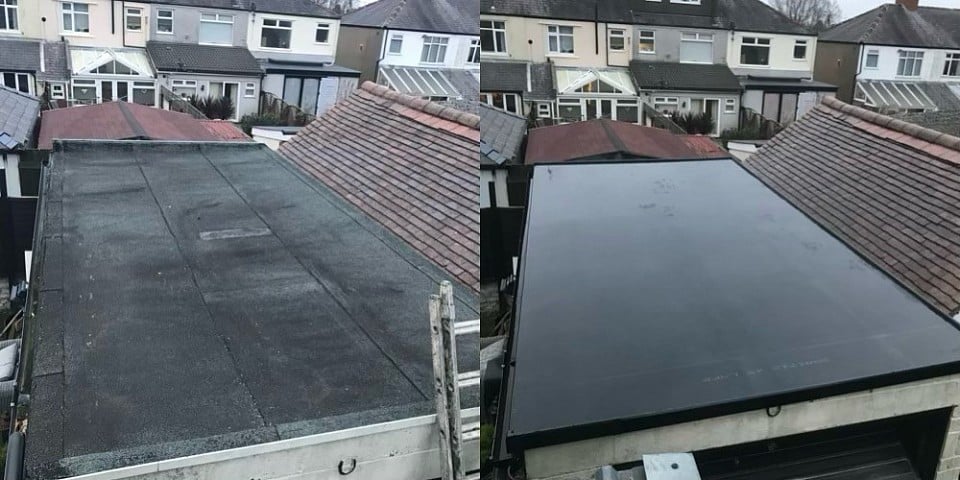
When it comes to replacing a flat roof, there are several steps that are important to achieve a long lasting and durable outcome. It starts with an extensive check by a roofing expert. In this examination, the state of the current roof, insulation, and the underlying structure are determined.
After the inspection, the old roofing materials are taken off. This step enables contractors to detect any damage that is concealed under the surface, such as moisture or structural problems. Any damaged decking or insulation will be repaired or replaced, and then the new roofing system will be installed.
The second step is to get the roof ready and install the selected roofing material. This can consist of insulation layers, waterproof membranes, and a protective coating depending on the system chosen. It is important to install them properly since even the best materials may fail when installed improperly.
Contractors conduct a final inspection after installation to ensure that all the components are of good quality. This makes sure that the roof is well sealed, well drained, and prepared to withstand the environment.
Choosing the Right Roofing Material
One of the most significant choices that have to be made when replacing a flat roof is the selection of the appropriate material. Various materials have their own benefits and different levels of durability.
EPDM roofing is characterized by its long-lasting nature and ability to withstand weather damage. TPO roofing is appreciated due to its energy saving qualities and reflective nature.
PVC roofing is very chemical-resistant and durable; thus, it is commonly used in commercial buildings.
Another popular variant is modified bitumen systems since they provide good waterproofing characteristics and can resist heavy foot traffic. The owners of the property ought to collaborate with qualified roofing contractors in order to identify the material that will best meet their needs and budget.
Factors That Affect Replacement Costs
Replacement of a flat roof may be very expensive depending on a number of factors. One of the main factors is the size of a roof because larger roofs will consume more materials and labor. The cost also depends on the kind of roofing material that is chosen.
Other costs can be incurred when the current roof is heavily water damaged or has structural issues which require repairing before installation. Accessibility, local labor rates, and project complexity can also impact pricing.
Even though replacing a roof is a major investment, it is not always the best strategy to consider the lowest price. Good materials and professional installation will most likely lead to reduced maintenance costs and improved service life, which are both more valuable in the long run.
Maintaining a New Flat Roof for Long-Term Performance
To ensure that a newly installed flat roof lasts as long as possible, it should be properly maintained. Frequent checks are used to detect small problems before they develop into big problems.
Property owners are advised to have their roofs professionally inspected at least once or twice a year, and also after the occurrence of severe weather.
It is also important to keep drains, gutters, and scuppers free of debris to avoid water build-up. Small repairs should be addressed immediately to prolong the lifespan of the roof and ensure that it works.
Regular maintenance is not only a way of safeguarding the roofing investment, but it is also a way of ensuring that the building is safe, economical, and free of water-related damages. When well maintained, a high quality flat roof can offer decades of dependable protection.